
What I’m Reading: Adult Children of Emotionally Immature Parents - by Dr. Lindsay Gibson
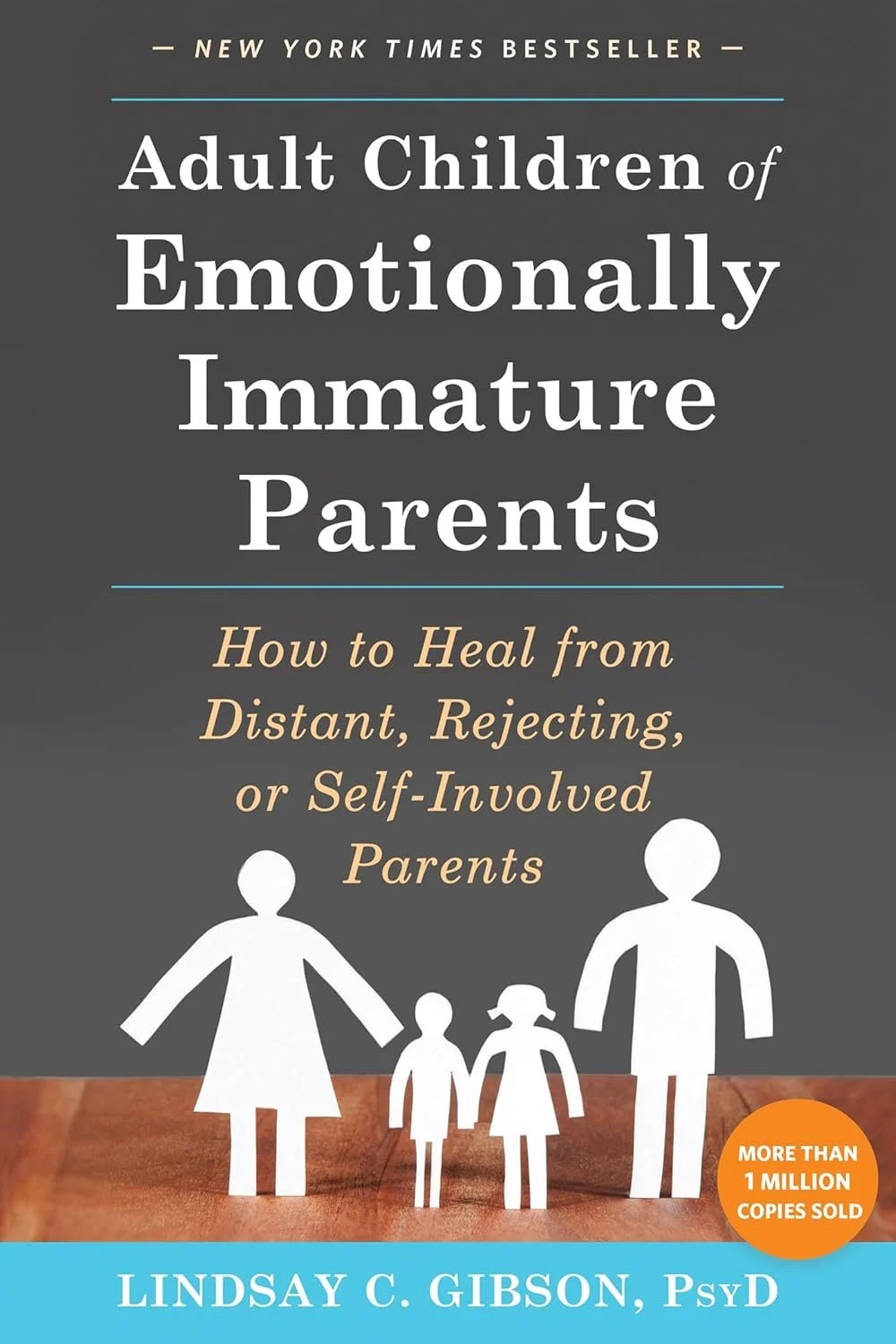
Book cover of Adult Children of Emotionally Immature Parents
Many adults come to counselling with an ongoing sense of confusion, self-doubt, or emotional exhaustion. They may function well on the outside yet feel chronically overwhelmed, disconnected, or unsure of their own needs. Often, these experiences can be traced back to growing up with emotionally immature parents.
Emotional immaturity does not necessarily mean a parent was abusive, absent, or ill‑intentioned. Many emotionally immature parents cared deeply, worked hard, and believed they were doing their best. Emotional immaturity refers instead to a limited capacity to relate in emotionally attuned, flexible, and responsive ways—especially under stress.
Children raised in these environments adapt in ways that help them get through childhood. Those adaptations can quietly shape adult life, relationships, and self‑worth.
What Is Emotional Immaturity?
Emotionally immature parents often struggle with emotional awareness, empathy, and regulation. Common patterns include:
Difficulty acknowledging or responding to a child’s feelings
Becoming defensive, dismissive, or overwhelmed by emotions
Expecting children to self‑soothe or meet adult needs
Reacting impulsively or rigidly during conflict
Prioritizing their own comfort over emotional connection
When this is the emotional climate of a household, children learn—often implicitly—that their feelings are inconvenient, unsafe, or unimportant.
The Four Types of Emotionally Immature Parents
Emotionally immature parenting can show up in different ways. While no category fits perfectly, many people recognize patterns from their family experience.
1. Emotional Parents
These parents are ruled by their feelings. They may be loving at times but unpredictable, overwhelmed, or easily dysregulated. Children often feel responsible for managing the parent’s emotions.
2. Driven Parents
Driven parents focus heavily on achievement, productivity, or image. Emotional needs may be dismissed as weakness or distraction. Love may feel conditional on success or good behaviour.
3. Passive Parents
Passive parents are emotionally checked out or avoidant. They may not intervene when support or protection is needed. Children often feel invisible and emotionally alone.
4. Rejecting Parents
Rejecting parents actively avoid closeness and may show irritation or contempt toward a child’s needs. Children often internalize a belief that they are a burden or “too much.”
Many families contain a mix of these patterns, and children often adapt differently depending on which role they had to play to stay connected.
Internalizing and Externalizing Coping Styles
Children respond to emotional immaturity in one of two broad ways: internalizing or externalizing—sometimes moving between both.
Internalizing responses turn distress inward. Adults with this pattern may:
Struggle with anxiety, depression, or shame
Be highly self‑critical or perfectionistic
Minimize their own needs
Feel responsible for others’ emotions
Externalizing responses push distress outward. Adults with this pattern may:
Experience anger, impulsivity, or emotional reactivity
Struggle with boundaries or conflict
Feel misunderstood or “too much”
Use control, withdrawal, or substances to cope
Neither response is wrong. Both are attempts to manage emotional pain in environments that felt unsafe or unpredictable.
The Invisible Grief Many Adults Carry
One of the most painful aspects of growing up with emotionally immature parents is a quiet, often unacknowledged grief. It’s not just grief for what happened, but for what didn’t—being comforted, understood, or emotionally protected.
Many adult children minimize this pain: “It wasn’t that bad.” “They did their best.” “Others had it worse.”
But emotional neglect does not need to be dramatic to be deeply impactful. Allowing space for this grief—without blame or judgment—is often a critical step in healing.
How This Shows Up in Adult Relationships
Early emotional learning shapes how we experience closeness. Adult children of emotionally immature parents may long for intimacy while simultaneously feeling unsafe within it.
You might notice:
Over‑functioning in relationships and feeling resentful
Difficulty expressing needs or asking for support
Attraction to emotionally unavailable partners
Guilt or anxiety when setting boundaries
These are not personal failings. They are learned survival strategies that once made sense.
Moving Toward Healing
Healing does not require cutting off parents or reliving every painful memory. It begins with understanding how your nervous system adapted—and learning new emotional skills that were never taught.
Counselling can help you:
Develop emotional awareness and self‑compassion
Reduce shame and self‑blame
Identify and honour your needs
Set boundaries without guilt
Build relationships based on mutual care
With support, many adults discover they are not “too sensitive” or “difficult,” but deeply attuned people who grew up without consistent emotional safety.
Questions for Reflection
Which type of emotionally immature parenting do you recognize most in your experience?
Do you tend to internalize or externalize emotional distress—and how has that shaped your relationships?
There are no right answers. These questions are invitations to notice with curiosity.
You Don’t Have to Figure This Out Alone
Understanding the impact of emotionally immature parenting can bring relief—and also complex emotions. Having a steady, compassionate space to explore these patterns can support meaningful change.
At Riverstone Counselling, I support adults who are unpacking family‑of‑origin experiences and learning healthier ways of relating to themselves and others.
If this resonates with you, we invite you to book a free consultation to talk more about your experience and what support might look like for you.
